Nope

Nope

Wednesday, April 8, 2015

"Bloodborne" Review

     From Software, known for their creations of the Dark Souls series and Demon Souls has released a new game made exclusively for the PlayStation 4. If you could not already tell from the picture above, its name is Bloodborne. Bloodborne is both a brutally difficult and incredibly satisfying game at the same time. First off, I'd like to state that I am a newcomer to From Software's games. I only recently experienced Dark Souls for the first time. Bloodborne drops players into the city of Yharnam. There is a strange illness spreading all over the city infecting its residents and turning them into your worst nightmares. Although the story here may not necessarily wow you, there's plenty more to be wowed by. You may start off in Yharnam, but soon after you will be traveling to many other locations. There is a fast-travel system in place with the fast-travel method being done using lanterns. Only one or two lanterns can be found in most areas of the game making for tense, sweat-inducing hysteria as you search for one to save your progress.
    As long as you've lit any lanterns you've come across, you'll have fast-travel access to those lanterns from within the "Hunter's Dream." This is essentially your main hub for purchasing/upgrading weapons, purchasing items and purchasing stat upgrades. You may also further customize your character here by purchasing new clothing. Bloodborne has a customization system in place for creating your character when you first start out. It's fairly deep, with the ability to shape many of your character's defining traits. There are also classes that you can choose at the start of the game based on your preferred play style. Assigning "Blood Gems" to your weapons also adds buffers to them for extra capabilities such as a damage increase or health boost. Weapons do have a durability counter, so be careful to check how much damage your weapon has taken and whether or not you need to repair it. Bloodborne's main currency is known as "Blood Echoes." These are obtained through killing
the game's deeply-varied enemies and or by collecting/selling certain items. Spend your echoes wisely though to ensure you're playing how you want to play. The game's secondary currency is known as "Insight." "Insight" can be used to purchase limited items from the "Hunter's Dream" as well as summoning other players for co-op play.
     Co-op in Bloodborne is a bloody-disaster. First off, to play with friends, both of you must be within ten levels of each other. Secondly, you both have to be in the same area and must each have the same game password set to play together. Even if you aren't planning on playing with friends, it still takes forever to have someone join your game. Other players, provided they have the "Sinister Bell," can also join your game as your adversary and murder you. While this has only happened to me a couple of extremely frustrating times, it's a brilliant feature of Bloodborne adding to the fact that you never know what awaits you in From Software's stunningly crafted world. When co-op does work though and someone joins you, it makes for quite a bit of fun as you and your "partner" traverse Bloodborne's world fighting enemies and bosses. You as well as other players can also leave notes for each other warning against a certain path or a note telling you to explore a certain path for loot. Other players' "ghosts" can also be seen by viewing "specters" throughout the environment, showing their demise.
     Bloodborne also contains "Chalice Dungeons." These are procedurally-generated dungeons that all have multiple layers with different loot to collect and different bosses to fight. "Chalice Dungeons" can only be accessed using "Chalices" you'll either collect from defeating bosses or from exploring the dungeons themselves. Perhaps one of my favorite features of Bloodborne, I loved the dungeons so much in part because of how separate they felt from the actual game. They're like a whole other world.
     Exploration is central to Bloodborne and if you don't do it, you're likely to miss out on some vital tools. For instance, there is a "badge" you can collect that allows for the purchase of a new weapon called "Ludwig's Holy Blade." The door that is used to access the area that the badge is in can only be opened after defeating a boss though. Other times, exploring is necessary to maybe find a hidden shortcut to a lantern or around a few nasty enemies. The game does an excellent job of making you feel like you need to inspect every nook and cranny of your surroundings.
     
Combat in Bloodborne is fierce and heart-pounding, and good luck, because is there no option to pause the game. If you don't dodge at the right moment or attack at the wrong moment, you'll end up severely damaged or worse, dead, losing all of your Blood Echoes. Your echoes can be retrieved though if you go back to where you died or kill the enemy that killed you. You'll know he has them because his eyes will glow. Enemies are fast and relentless and getting too close can either allow you to inflict massive damage or have massive damage inflicted upon you forcing you to quickly roll away and consume one of your blood vials (health potions). As your health bar deteriorates from enemy attacks, you have the ability to regain your health by striking back.
     Luckily, you have an arsenal of "Trick Weapons" and guns at your disposal. These "Trick Weapons" have two versions. One usually for close-range (Moderate damage) and the other, for long-range (Heavy damage). These really give the player the ability to fight how they want. For example, the "Kirkhammer's" short-range version is a sword, while its long-range version is a much larger hammer. Primary weapons are held with the right hand and when switched to their long-range version, typically become two-handed. Secondary weapons are held with the left hand. These include guns and even torches (more for lighting the way in dark places). Parrying is done by shooting an enemy right before they are about attack. This staggers them to the ground allowing the player to inflict massive damage with their primary weapon or by performing a visceral attack where you shove your hand into an enemy's body and essentially rip out a piece of them. Enemies can be locked onto for easier targeting as well. Having played Dark Souls recently, I can without a doubt say that in comparison to its combat, Bloodborne's is far more fluid.
     Aesthetically, Bloodborne shines or rather darkens with beauty. The city of Yharnam is Gothic around every corner and I love it. Blood spatter from your enemies soaks your clothes and glistens in the darkness. Rendered in a smooth 1080p, everything looks great. Other parts of the game also look like they're straight out of the Victorian Era. I did experience some frame-rate hiccups from time to time, but they did nothing to dampen my experience. Load times however were annoying to say the least. Being the brutally difficult game that it is, I died a lot. Every time you die, the game's title, "Bloodborne" in large, bold letters is centered across the screen for a solid forty seconds to a minute and every single enemy that you slaughtered, respawns.
     Boss-battles are a huge corner stone of Bloodborne, most of the time being painstakingly hard. Many bosses are actually optional, but are still an angry-joy to participate in due to how accomplished you'll feel after and the rewards you'll earn such as a chalice and or many Blood Echoes. Bosses are usually much, much larger than you with tremendously more health than you. With this being said, it is best you pay close-attention to a boss's move set so you can out-maneuver them. Grotesquely well-detailed, From Software's genius art design stands out amazingly well against anything else I have ever seen.
     Is Bloodborne a "fair" game? Yes, because as long as you pay attention, you'll be just fine. It's designed to be difficult, but learning from your mistakes is what makes you better. One minute you'll be cursing From Software's name and the next you'll be praising Bloodborne, calling it a masterpiece. Employing a stellar equation of risk with reward, Bloodborne is near-perfect in all its glory.
PROS:
- Deeply varied enemies
- Chalice Dungeons feel like a whole other world
- The necessity of exploration and strategy
- Deep combat system
- Absolutely breathtaking to look at in every way
CONS:
- Co-op
- Loading times
- Poor story
Final Score: 9/10

Saturday, March 21, 2015

"Hotline Miami 2: Wrong Number" Review

     "Hotline Miami 2: Wrong Number" improves on its predecessor in a number of ways, but were some of those improvements really necessary? In developer, Dennaton Game's sequel, you are now playing as multiple characters, experiencing multiple, intersecting views of the story through their eyes. The events in "Hotline Miami 2" take place before and after those of the previous game. I have to be honest, when I played the first game, I was so befuddled with the story that by the end of it, I had to have someone explain it to me. With the sequel containing thirteen playable characters, it was much harder to get a good read on the story. Most of these new characters have masks and their own special abilities for dispatching enemies. The masks were always a huge favorite of mine from the original and it's awesome to see new ones in the sequel.
     Dennaton Games definitely stepped it up with "Hotline Miami 2". The levels are bigger, the violence is as brutal as ever and the soundtrack will have your heart pumping and your head rocking. Levels take you to new areas such as a shipping yard, office building, sewers, etc. More to explore is usually a good thing, but sometimes it can backfire. Often times, even stretching your view to far sides of the levels does nothing for you as you can't see all the way across. You'll think you're in the clear, when out of nowhere, an enemy or some damn rabid dog will come charging at you out of your line of sight. Instead of a positive, these larger levels feel like a negative, impacting "Hotline Miami's" original formula of tight, but still deeply enjoyable levels. I'm not saying that developers should always stick to the same format, but sometimes, improvements are made where they aren't needed.
     Let's talk about the masks. Some masks have returned, while others make a new, violent entrance. One set of characters who both wear swan masks are controlled at the same time using the two triggers on the controller. One has a chainsaw and the other uses guns. This makes for an extremely interesting dynamic as if one of them dies, you fail a level. The zebra mask allows you to avoid enemy attacks by rolling. Tony the Tiger makes a return with his fatal fists, but this time lacks the ability to pick up weapons. While there is an abundance of playable characters in "Hotline Miami 2", there are unfortunately, fewer masks.
     "Hotline Miami 2's" overall art design is still here, but better than ever. The game's pause screen is like a VHS tape when you pause it, showing a white static line across the middle of the screen. The level selection screen has the levels depicted as VHS tapes as well. Even quitting to the main menu is called "Eject." Bright colors pierce your eyes from every direction and the violence is taken to new heights. Suck it Australia. Everything is deadlier in "Hotline Miami 2." Bullets cause fearsome carnage leaving intestines exposed or body parts blown off. Sharper weapons such as knives or machetes can decapitate enemies or slit their throats as an execution technique. Even decapitated heads can be kicked around if you walk over them. More blunt weapons such as the baseball bat can be equally brutal allowing you to pulverize your enemies' heads into bloody pulps. Also, the quick restart button obviously makes its return, keeping you playing for hours until you finally realize that you need a break.
     Remember that soundtrack from the original that blew your mind? Well, it's back, with all new tracks that will make your heart pump blood at the speed of light and keep your eyes frantically scanning your screen for enemies. Now, instead of having to scour the internet for the songs/artists, the level selection screen lists the track used for each level. Some previous artists make a return, while new ones make their debut. There are over 40 tracks in "Hotline Miami 2", all of which will make you glad you bought this game. Sidenote, get excited for a level editor that will also be coming to the game in the form of a later update. 
     All in all, "Hotline Miami 2" is an ambitious sequel with changes that made it a better game overall than its predecessor and changes that will make you wish were never changed. Make no mistake, if you play this game, you will probably end up punching walls out of frustration until your knuckles bleed.
PROS:
- Multiple playable characters
- New masks
- Intriguing, varied locations
- Incredible art design
- More brutal than ever before
- Soundtrack will blow your mind
CONS:
- Hard to follow story
- Overwhelmingly large levels
- Fewer masks
Final Score: 8.5/10

Friday, March 20, 2015

"Battlefield Hardline" Review

     
     "Battlefield Hardline" is definitely something new in the Battlefield series. The question is though, how new? "Hardline's" campaign has you playing as Detective, Nick Mendoza. You work for Miami Vice and discover that *surprise-surprise*, there are a lot of dirty cops. You being the good guy and all, you decide to try to bring as many people to justice as you possibly can. Characters are well-voiced, but many of them turn out to be very stereotypical. 
     "Hardline" takes a different approach this time around with a large number of stealth sequences in its campaign. Don't worry though, for all of you Michael Bay nutcases, there are still crazy action sequences. Whether you're driving a tank, controlling an abandoned plane's cannon or in a high speed, off-road chase, "Hardline's" got it for sure. During the stealth sequences, you have the ability to flash your badge at up to three enemies causing them to put their hands up. You may then arrest each of them by laying them down on the ground and cuffing them. Doing so will net you quite a bit of points each time. However, killing your enemies will give you no points... at all. This renders the "arrest system" effectively broken. The game should give at least some points for going  bad. The more enemies you arrest, the more weapons you'll unlock. Certain enemies have warrants out for their arrest. If you arrest them, you'll gain extra points. Enemies can be tagged and warrants revealed as well using your scanner.
     To be honest, I would've rather watched both "Bad Boys" movies than played "Hardline's" campaign. At least the movies would have shown me a good time. Developer, Visceral Games has used just about every single cop TV show/movie cliché in the book during the game's campaign. From hotel shootouts to warehouse shootouts to a weed grow house shootout. It's all here. Of course, you can choose to go through these sequences stealthily if you please. The game has you playing in many different locations including a swamp, island, hotel, warehouse and others. Probably one of the coolest parts about "Hardline's" campaign is the fact that the entire thing is set up as a television show. After each mission, or "episode", an icon from the next "episode" will pop up in the corner of your screen saying "Next episode playing in 30 seconds", like Netflix. If it was a television show though, I guarantee it would be cancelled by the end of its first season. Whenever there's a dull moment in "Hardline's" campaign, the game just throws a crazy action sequence your way to keep you entertained. It's funny how the one thing that made a game series boring is the one thing that vitalizes it. 
     Graphically, "Hardline" passes. Character models shine with excellent attention to detail, as well as the little things in environments such as street light reflections in puddles. Destructible environments are also available, but the scale of how destructible they are is pretty small. Visceral Games tried to craft an original Battlefield campaign, but just about every idea they had fell victim to another cliché. Even all of the celebrity appearances in "Hardline's" campaign couldn't save it. There were barely any original ideas here. During the campaign, I was frequently arresting the same exact character model, hearing the same lines of dialogue over and over. It felt so lazy on Visceral Game's part. Even the ending is HUGE sequel bait, but I still kind of enjoyed it.
     Multiplayer in "Hardline" is very different from past games in the Battlefield series. It's cops vs. robbers this time with seven game modes and nine maps. Out of those seven game modes, only two modes from past Battlefield games have returned; Conquest and Team Deathmatch. The other five, which are all new game modes are Hotwire, Heist, Rescue, Blood Money and Crosshair. "Hardline's" multiplayer is almost always at breakneck speed. Hotwire has most players in high speed chases trying to secure marked cars while gunning each other down. When in a vehicle in Hotwire, which range from motorcycles to big rig trucks to muscle cars, players can stick themselves out of the windows for drive-by shooting. 
     Heists have the robbers trying to break into a vault and steal the cash. The cops must stop them from reaching their extraction points with the money. Rescue has the robbers holding hostages, while the police must rescue them. There are no respawns in this mode. In Blood Money, both the cops and robbers are trying to retrieve money and return it to their respective team sides. Sides can be raided to secure more money and the first side to reach the money goal or whoever has the most money when time runs out, wins. Crosshair is a little bit like Rescue; there are no respawns. In Crosshair, the cops are keeping a criminal turned witness safe that they need to get an extraction point and the robbers must kill him before he gets there. Destructible environments seem to be more prevalent in multiplayer. Cover can be obliterated, making you an easy target. Maps also have events that can be triggered by players causing small or humongous levels of destruction. 
     "Hardline's" multiplayer progression system is still relatively the same as past Battlefield games, except for a couple of changes. Instead of unlocking new weapons based on your rank, most weapons can now be purchased with the money you earn from the game modes. Attachments are earned through kills. Certain items will be awarded for completing specific challenges. As always, you can carry extra things such as gadgets or first aid kits. I appreciated the ability to purchase weapons instead of the traditional level-progression system. Sound in multiplayer is pulse-pounding and will keep you on your toes, scanning your environment for threats. For some reason, multiplayer's sound sounded better to me than in the campaign.
     "Battlefield Hardline" still looks about the same as the previous Battlefield games only this time it's cops vs. robbers. The game's disappointing campaign made me shrug and I was worried that the multiplayer would be a disappointment as well, but luckily, that was not the case. There have been some great changes made, along with some new additions, but not enough has been done here to make this feel like a totally new experience.
PROS:
- Campaign's episodic format
- New, varied multiplayer modes
- Better weapon unlocking system
- Breakneck speed multiplayer
- Impressive graphical details
CONS:
- Disappointing story
- Story clichés everywhere!
- Broken arrest system
- Not a totally new Battlefield experience
- Repeat character models and dialogue
- Stereotypical characters
Final Score: 7/10

Sunday, March 15, 2015

"DmC Devil May Cry: Definitive Edition" Review

   
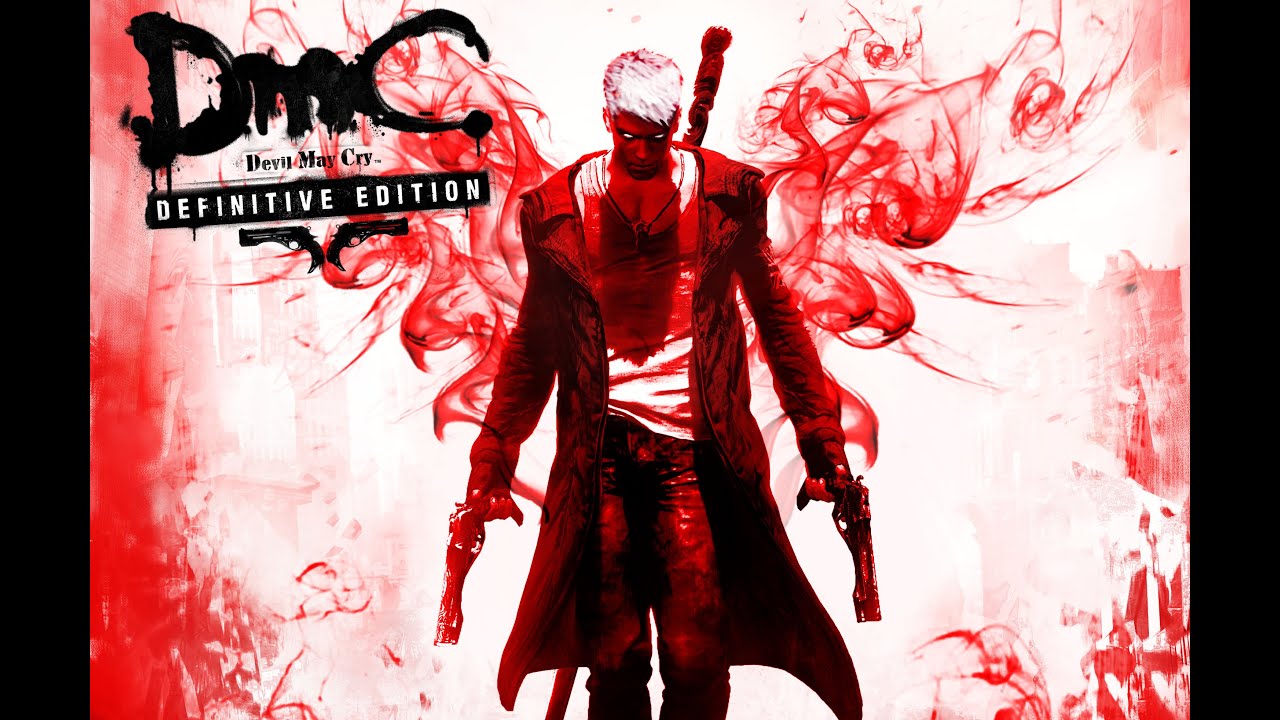
     DmC Devil May Cry: Definitive Edition  is largely the same game as its previous "non-definitive" version released back in 2013. However, this time around, you'll be experiencing the game in 1080p and 60fps. You play as infamous demon-killer, Dante. Dante is the spawn of an angel and a demon; a "Nephilim." The redesign of Dante by developer, Ninja Theory, is audacious. Dante is a huge, arrogant douche. However, this is not a bad thing. Ninja Theory took a bold risk with the character and it paid off. Dante is that one guy that deep down, everyone wishes they could be like; filled to the brim with confidence. He's got a cool hairstyle, muscles, a sweet jacket and doesn't give a shit about anything.
     When first asked to help save the world from Demon King, Mundus (who wants to enslave mankind), Dante's words are "Why should I give a shit?" He is eventually persuaded by his brother Vergil, and Kat, Vergil's helping hand. The majority of the game takes place in "Limbo", the realm between the real world and the demon world. Combat in "DmC" is tense and gratifying. Each time you fight you have the ability to build up your combo and score big points as you fight a multitude of enemies. Dante has many ways to dispatch his demon enemies, such as his sword, two guns, "Ebony and Ivory", scythe (Osiris), a large axe (Arbiter) and two large, but handheld "ninja stars." While in combat, Dante can also pull himself towards enemies or pull them to towards him. Having the variety of weapons is great, but can make combat a little complicated when you want to switch things up. When things get heated and Dante is surrounded by demons, you'll probably find yourself gravitating towards a certain weapon instead of switching it up. The game does fix this problem in most circumstances though due to different enemy types requiring specific weapons in order to damage them. Different weapons can be accessed through holding the trigger buttons down or with the d-pad. If you ever feel overpowered in combat, you can use Dante's new ability, "Devil Trigger", which when activated will launch your enemies into the air for easy killing. There is a plethora of different demon enemies. Also, any combat upgrades purchased can be "unpurchased" if you want to try out other ones.
     As you build up your combos, a voice will scream how good they get. You'll hear words such as "Sadistic" or "Sensational." Hearing these words is encouraging, letting you know that you're kicking demon-ass in combat. The small visual boost the game receives from its 1080p upgrade is nice, but nothing to get excited about. The change to 60fps is helpful in combat, creating a much smoother experience all around.
     Graphically, "DmC" still looks the same as its last-gen version. The same textures are still there and not much has been redesigned. Additional enhancements include a manual lock-on for combat and a new mode called "Bloody Palace" that pits Dante against waves of enemies. There is also "Turbo Mode", which speeds up the game by a full twenty percent. All dlc has also been bundled with the game, including various skins and the "Vergil's Downfall" dlc. For anybody who is looking for a greater challenge, "DmC" has it, with seven difficulty modes. Voice-acting is believable and the characters are portrayed well. There are A LOT of annoying puns and the game's humor can be overbearing at times. The game also does an impressive job of comparing itself to the real world. Examples are how the news is evil and its sole purpose is to control the population and keep it in fear, how mankind has freedom, though all they do with it is fight each other and a soft drink called "Virility" that controls the population and makes it weak. The game's set pieces really bring it to life. When playing in "Limbo", buildings will come apart to form platforms for fighting or traversal, black ooze will rise up from the ground and the world will crumble around you. The designs of the demons are scary-detailed. The way Dante's weapons pulverize his enemies is a work of art.

     Boss fights are similar to those of the "God of War" series. You pay attention to an enemy, wait for an opening, attack and then repeat the cycle. Most bosses have multiple life bars while Dante only has one that is much smaller. Boss design is grotesquely and visually impressive ranging from fighting an acid spewing succubus to a giant fetus attached to its mother. You will gag frequently during these boss fights. While the boss fights are entertaining, none of them are quite as fun as the actual combat itself. The overall sound of the game is crisp and clear and while I may not be a fan of screaming in music or loud metal, the game's soundtrack fits well. 
     Unfortunately, if you're looking for a story-driven game, "DmC" isn't for you. You fight waves of demons, watch a cut scene or two, then move on to the next mission. It's a hack 'n' slash, and an awesome one at that.
PROS:
- 60fps
- Super-cool Dante
- Improved and variated, satisfying combat
- Real world comparisons
- Difficulty options
- New game modes, plus all previous dlc
- Amazing art design
CONS:
- Largely the same game as its last-gen counterpart
- Overbearing dialogue
- Boss fights are not as fun as the actual combat
- Disappointing story
Final Score: 8/10

Thursday, March 5, 2015

"OlliOlli2: Welcome to Olliwood" Review


     Welcome to Olliwood. For anyone who has never played "OlliOlli", it is a simple enough to grasp, yet incredibly hard to master, 2D skateboarding platformer. OlliOlli2 is an all around better experience than the first installment. It adds new tricks, new grinds, new stages, manuals and a soon to be added split-screen multiplayer mode. Each level in "OlliOlli" features five challenges to complete. While you only need to finish the level to move on to the next one, completing the challenges offers a nice sense of accomplishment for the player. For each level you "five-star", a pro version of that level is unlocked. The short explanation; a WAY HARDER level.
     
      It's clear that the developers, Roll7, went for a much cleaner, smoother experience this time around. The first game was essentially 8bit, while OlliOlli2 isn't pixelated at all. It's the little things in games that matter the most; like certain animations, fine-tuned controls, eye catching environments and extra content. OlliOlli2 has all of these. The game's controls are essentially set to the left stick, triggers and "X" button. The left stick is used for tricks and grinds similar to EA's "Skate" controls. If you ever have a problem with executing a trick or a grind, just look it up in the game's handy "Tricktionary". The "X" button is used for landing your tricks and pushing for more speed. You're going to want to tap it right before you land in order to achieve a perfect landing, awarding you more points for your trick or combo. Depending on when you tap it, you'll be awarded an either okay, sick, perfect, sketchy or sloppy landing. Landing manuals allows you to continue your combos for as long as you want; that is, until you screw up. A smile will light up your face each time you land a trick or a long combo and see your score shoot up.
     While the environments for each stage in the first game were different, they remained dull. The sequel changes things up by adding a splash of color and creativity to each of its five stages. "OlliWood" is just how it sounds, a Hollywood-esque stage with palm trees and skyscrapers in the background. Some levels even have movie sets. "Curse of The Aztec" is reminiscent of the "Indiana Jones" films with skull statues, molten lava below you, volcanoes, trees with hanging monkeys and spike traps. "Gunmetal Creek" is a Western Stage with dynamite you must avoid, a chugging train and canyons in the background. Cool sidenote-stages have ramps to boost your speed if you trick off of them. "Gunmetal Creek's" ramps are revolvers that shoot when you trick off of them. "Carnival of The Dead" is an abandoned theme park filled with hazardous waste, carnival rides in the background, bright colorful lights and roller coaster tracks you can skate up and down on. It rains in this stage as well, creating a beautiful scenery. "Titan Sky" is a futuristic stage with giant robots in the background, along with flying cars and floating platforms. Each stage brings something new and fresh to the table, keeping you on your toes.
     OlliOlli2 has quite a few things for the completionists out there. As I said before, there is a pro level for each level you five-star. If you five-star every level, you unlock "RAD MODE", a new difficulty mode. There is also "Daily Grind"; a daily contest where you only get one shot at a stage to score your highest among the other players on the leaderboards. There are "Spots", which are basically shortened versions of each level without challenges. The "Skatepark" offers tutorials for each skill just in case you ever need a refresher course. The game's soundtrack is top-notch. Each track fits perfectly, never being too fast or too slow for the game's pace. 
     When I first started playing OlliOlli2 I loved it, then I hated it, then loved it again. It's an endless cycle. It's quick reset button similar to Hotline Miami allows you to repeat any level instantly if you fail. If you're like me, you'll spend hours trying to five-star each level. Even after I beat a level, I found myself going back trying to beat my high score. Time flies when skating through "OlliOlli's" world. In that time, your thumb will ache severely, your throat will be soar from yelling at your TV and you might even hate yourself a little bit. However, I promise you that completing the level challenges is rewarding. To know that your effort paid off and you have those stars to show for it is a great feeling. Roll7 clearly has a deep passion for making video games and I hope they keep putting as much love into their other games as they did for "OlliOlli."

PROS:
- Incredible art style
- Fine-tuned controls
- Extra content for completionists
- Perfect Soundtrack
- Difficult, but rewarding gameplay
Final Score: 10/10

Monday, February 23, 2015

"The Order: 1886" Review

     
     Amidst The Order: 1886's long, unskippable cut scenes, embarrassingly high amount of quick time events and a lack of other things lies a game that could’ve been so much more. The Order: 1886, developed by Ready at Dawn Studios is Sony’s newest exclusive on PlayStation 4. Taking place in Ready at Dawn’s painstakingly well-crafted 19th Century London, “The Order” is the best looking console game I have ever played. You play as Sir Galahad, one of the Knights of the Roundtable. Along with your comrades, it is your sworn duty to uphold the order and fight against the supernatural as well as other threats. “The Order’s” story doesn’t quite always follow a straight path, instead changing direction frequently. Essentially, you and your comrades are dispatched to fight against the supernatural, but soon a nefarious plot unravels; leading Galahad to question those around him.
     Graphically, as I stated above, “The Order” is the best looking console game I have ever played. The game is letter boxed as well, which I actually enjoyed because it added a certain cinematic touch. Cut scenes are almost indistinguishable from gameplay. However, graphics can only get a game so far. Environments, albeit linear, are beautifully designed. If you explore, you can inspect photos, among other things to immerse yourself more into the game’s world. Every hair can be seen on the characters’ heads, every crease in their clothing, every fiber of their clothes, even the reflections of light in their eyes.         
     Most of the weapons seem standard except for the ones invented by the young and great Nikola Tesla such as the Arc or Thermite gun. The Arc gun fires a charged electrical blast inflicting serious damage on anybody who stands in its way. The Thermite gun fires a flare which is then ignited by a smoke shot from the gun. I only wish that these scientific guns were utilized more throughout the game’s campaign. The futuristic elements of "The Order" are what made it so fascinating. For instance, when injured in combat a knight can drink from a special bottle to heal their wounds. Gore effects when shooting enemies were unbelievable. Detailed red mists of blood spurting into the air caught my eye in numerous instances. The camera is pulled in tightly to Galahad making for some tense moments during combat. While shooting bad guys is always fun, at a certain point, the fire fights just became mundane. It became a simple act of sticking to cover, popping your head in and out while picking off the bad guys.
     “The Order’s” main problem is control. It is constantly taking control away from the player with its far too many QTE’s. The QTE’s made me feel like I was watching a movie instead of playing a game. When executing a takedown the game always decides for you whether it will be a lethal or non-lethal takedown, even in stealth sections of the game. You’d take cover behind a corner, wait for an enemy to approach you and then wait for a QTE circle to fill, timing your attack. Boss fights are even reduced to simple button mashing or pushing the stick in a certain direction. It became so bad that I actually sighed each time a button prompt was displayed on screen.
     “The Order” is not open world; it confines the player to a lot of relatively tight spaces with not a lot of wiggle room. This is not a bad thing though. In today’s generation of games, all I see is open world. Playing a linear game again made me kind of happy. The game may be linear, but there were definitely some cool set pieces such as rappelling down the side of a zeppelin then fighting your way through it. The characters in “The Order” are well voiced and I really got a sense of what they were feeling while playing through the story. Certain characters could have been developed more, such as Galahad’s partners Isabeau, Sir Perceval and Marquis. Isabeau was clearly a love interest of Galahad and I just wish that Ready at Dawn had done more to build a relationship between the two of them instead of a few little moments here and there. On an awesome side note, kudos to Ready at Dawn for working Jack the Ripper into the story.
     Remember how I said, “It is your sworn duty to uphold the order and fight against the supernatural”? Well… you do fight the supernatural; werewolves or “Lycans” to be exact. However, these fights are reduced to dodging the werewolves with the press of a button, shooting them a bunch of times and then finishing them off with your knife with a one button press. Oh, and did I mention the fact that you fight more humans than supernatural? Lame. Why entice with such a cool idea then barely expand on it? You fight about 80% humans, 20% supernatural. A quick backtrack to the QTE’s; the developers clearly recycled an almost exact boss battle from the beginning of the game for the end of the game; talk about lazy.
     The Order: 1886 isn’t a bad game; it just could’ve been so much more. Let’s put it this way, I believe that this game was merely a test of the PS4’s power. Having seen the so blatantly obvious sequel bait left at the end of the game, I’m excited to see where Ready at Dawn Studios takes “The Order” next. 
PROS:
- Best looking console game to date
- Science Guns
- Bringing linear back
- Voice Acting
CONS:
-  Frequently changing story
- Not enough Science gun use
- Mundane fire fights
- QTE’S
- Lack of Supernatural enemies

Final Score: 6/10


Wednesday, February 4, 2015

"Dying Light" Review

     
     Dying Light is by no means perfect; however it would not be too far off if Dead Island developer, Techland had just worked a bit harder to really make “Dying Light” in a league of its own. Instead, what we get is a combination of many other popular games equaling a still very impressive AAA title. Having never played “Dead Island”, I didn’t quite know what to expect going into “Dying Light”, but I came away thoroughly and unexpectedly pleased. Here’s the gist; you are Kyle Crane, a government agent dropped into the Middle Eastern-esque city of Harran. Your job? To secure a file for your government employers, the GRE. You parachute into Harran in a vertigo-inducing cut scene. As soon as you hit the ground a few thugs surround you and you “cleverly” pull out your gun and shoot them even after they tell you not to shoot because it will alert zombies. A zombie comes rushing down the street and immediately bites you. You are given "Antizin", medicine that suppresses the symptoms of the infection.
     You are saved by a couple of free runners, Jade and Amir. After the opening sequence, the game makes you participate in an hour long tutorial of learning the basics. Firstly, parkour is a central aspect of “Dying Light” and its open world. You can run, jump and climb on almost 100% of everything around you. It’s not as fluent as “Mirror’s Edge”, but it is quite impressive. Later on in the game, you can obtain a grappling hook for easier travel. Think Just Cause. A couple of unlockable skills pertaining to the game’s parkour are the ability to vault off of a zombie while running or run up walls to reach a high ledge. There are three skill trees; Survival, Agility and Power. Agility and Power upgrade points are simply earned by running, jumping and climbing while Power points are earned by just killing zombies. These points are also doubled during night time. Survival points are earned through campaign missions, side quests, etc. Though three skill trees might seem daunting, Techland did an excellent job in balancing them and by the time I reached the end of the game’s campaign I had unlocked almost all of the available skills. I would recommend that you purchase the skills based on your preferred playstyle.
     The zombies in “Dying Light” are well, how do I put this? Dumb. When I say dumb, I mean almost brain-dead. However, here’s the catch, daytime consists of mainly “chump zombies”, but night time is where the zombies put on their big boy pants. Besides your average dumb zombies during day time, there are a few different, more challenging types. Brute zombies, acid spitters, bombers and runners present a decent if not greater challenge depending on your weaponry and unlocked skills. The runners were perhaps my favorite type of zombie in the game because of their little bit of humanity they still had left. If you hit one and then backed away, 9 times out of 10 they’d scream at you, “NO! PLEASE… AAAAGHHHH!” I almost didn’t want to kill them at first, but my mind quickly changed as soon as I started slicing them up like Swiss cheese. Combat is clunky and unprecise, but that's what it makes it fun. Guns can be used, but are ill-advised due to their high likelihood of alerting zombies.
     “Dying Light’s” day and night cycle is the game’s main selling point. At day time, your objective is to complete quests and scavenge for supplies, while at night your objective is to run OR sneak back to an unlocked safe house as fast as you can. Safe houses can be unlocked simply by clearing out zombies from the select areas and turning on the safe house’s power. Night is when the Volatiles come out; the fiercest and most relentless of the undead. If they spot you, they will chase you down like a pack of wolves. Plus, they can pretty much instantly kill you. Night time is definitely a success in the scary department considering the fact that I would always be frantically looking around using my “survivor sense” to scan the environment for them. I gotta say, if I couldn’t control my bladder, my bed would be ruined from each time I experienced night time in “Dying Light.”
     Story-wise, “Dying Light” is severely lacking. The story is bland and unoriginal and just barely scrapes by on a couple of decent characters and cool set pieces. The voice acting for the main characters is pretty darn good, but the good voice acting compliments stop there. Many of the other characters that you’ll meet along the way doing sidequests make for some of the drollest voice acting and lip-syncing work I have ever seen. These characters look like parts of their lips were stitched together when they talk. Not to mention how bored they sound, devoid of all emotion. Once you actually get into the sidequests though, they will pull you in. Some will make you laugh while others will make you cringe with their dark tones. I wish that developer Techland had just tried a little bit harder to really make the game’s story their own instead of relying on stereotypes like the obvious villain and a main character working for a secret government agency trying to secure a file. I mean seriously, come on guys.
     Graphically, “Dying Light” succeeds environmentally with its design of the game’s building structure and beautiful lighting effects followed by a spectacular dismemberment system with lots of detailed blood and gore. Character models look like early PS3, but considering that the game was first person and I couldn’t see what Kyle Crane looked like except for his legs and arms, I didn’t care too much. “Dying Light” has two maps. “The Slums”, exactly what it sounds like and “Old Town”, a more city-like map. Both offer a different aesthetic and that’s what I like the most about the maps. On a side note, “Dying Light’s” soundtrack is excellent. It’s sci-fi, it’s omniscient, it’s pulse pounding. It’s the perfect combination of music.
     Crafting in “Dying Light” is kept simple. You don’t need to find a workbench or anything like that to craft items. To craft, you simply tap the touch pad on the PS4 controller and the crafting menu will be brought up so you can craft on the fly. A few items that can be crafted are Molotov cocktails, throwing stars, fire crackers, medkits and upgraded weapons. Weapon crafting is where the game’s crafting system is at its strongest. Throughout the game, either by completing certain campaign missions or side quests, weapon blueprints are obtained. Each blueprint will work with a specific set of base weapons. Each blueprint adds a variety of different level effects to your weapon ranging from toxicity to fire and electricity with quite a few more effects. If you want better weapons, your best bet is to level up your character’s survivor rank as much as possible.
     “Dying Light” also features a co-op mode that allows for 4 player story mode exploration and the ability to be a zombie and invade other players’ games. Due to server issues I’m assuming, I have been unable to experience co-op. However, I did play the tutorial for the “Be the Zombie” mode and I have to say, it’s quite the creative feat. You take control of a “Night hunter” and hunt down other players using your super speed and agility. You can pounce on players and essentially just devour them… Well, I’m not quite sure what you do when you catch someone; you either eat or smash them to pieces. Regardless of the means of death, it is gruesome and beautiful at the same time.
     I’m glad I never played “Dead Island” so I could go into “Dying Light” with a clean slate of expectations. Techland certainly borrowed a lot of things from other popular game series, but they implemented what they borrowed extremely well. “Dying Light” is a new take on the zombie genre and each time I played it, I grew fonder of the game and the developers who had put so much passion into this new title. I hope for more zombie-parkour adventures from Techland in the future.
Final Score: 8/10
PROS:
-          Parkour
-          Well divided skill trees
-          Day/Night cycle
-          Beautiful environment design
-          Crafting
-          Solid game series rip-offs
-          Highly satisfying blood and gore
-          Excellent Soundtrack
CONS:
-          Daylight zombies are a little too dumb
-          Lame story
-          Emotionally lacking side characters
-          Relies too heavily on video game stereotypes


-          Broken co-op